A pre-shipment quality check compares the finished order with the agreed product specifications before dispatch. For goods sourced from India, your checklist should cover product identity, quantities, visible condition, agreed measurements, packaging and labels. Define the inspection scope and the evidence you need before production starts.
Approving a sample gives the supplier a reference. The finished order still needs to be assessed against that reference. For an overseas buyer, finding a wrong variant or packaging problem while the goods are still in India creates an opportunity to address it before international transport.
This guide covers buyer-requested product checks. Any separate regulatory inspection, product testing or certification required for your product and destination needs its own scope.
Agree what will be inspected before placing the order
Give the person checking the goods the approved specification, sample reference, quantity by variant and packaging instructions. Explain which requirements are essential and what variation you will accept. For handmade products, agree acceptable differences using representative examples where possible.
Also confirm when the check will take place. The goods need to be available for the agreed inspection, with enough time remaining to investigate or correct problems. Ask how the inspection date relates to packing, final payment and the planned dispatch.
A clear scope states the batch size, how many units will be checked, how they will be selected, the checks to perform and who decides whether to release the order. Avoid an instruction as broad as ‘please check the quality’.
If you are still choosing a supplier, start with our guide to verifying an Indian supplier before a bulk order. It covers the identity and capability checks that come before production approval.
Use a checklist tied to the purchase order
Adapt this checklist to your product. Any measurements, functional tests or specialist assessments need to be agreed with the inspection provider; they should not be assumed to be included in a standard visual check.
| Area | What to compare | Evidence to request |
|---|---|---|
| Product identity | Model, colour, size and other variants against the order | Labelled photographs and a list of the variants checked |
| Quantity | Ordered units, units received and quantity by variant | A count record showing shortages or overages |
| Dimensions | Agreed measurements and tolerances where measurement is in scope | Recorded results with a scale or measuring tool visible where useful |
| Visible condition | Cracks, stains, chips, loose parts and other defined visible defects | Close photographs linked to the affected item or carton |
| Sample comparison | Finish and agreed features against the identified approved sample | Side-by-side images and a written description of differences |
| Labels and artwork | Product labels, branding and print version against approved files | Readable photographs of the finished labels and packaging |
| Dates and seals | Visible batch or date markings, seals and agreed shelf-life criteria where relevant | Images of the markings and any damaged or missing seals |
| Packing | Unit protection, carton condition and agreed packing arrangement | Pictures before cartons close and of the final external packing |
Add category-specific checks where needed. For textiles, this may include agreed sizing and visible stitching. For fragile decor, it may include chips and separation between packed items. Sealed cosmetics or food require different checks from an unsealed non-food product. Confirm the scope for the actual goods.
Understand the difference between sampling and checking every unit
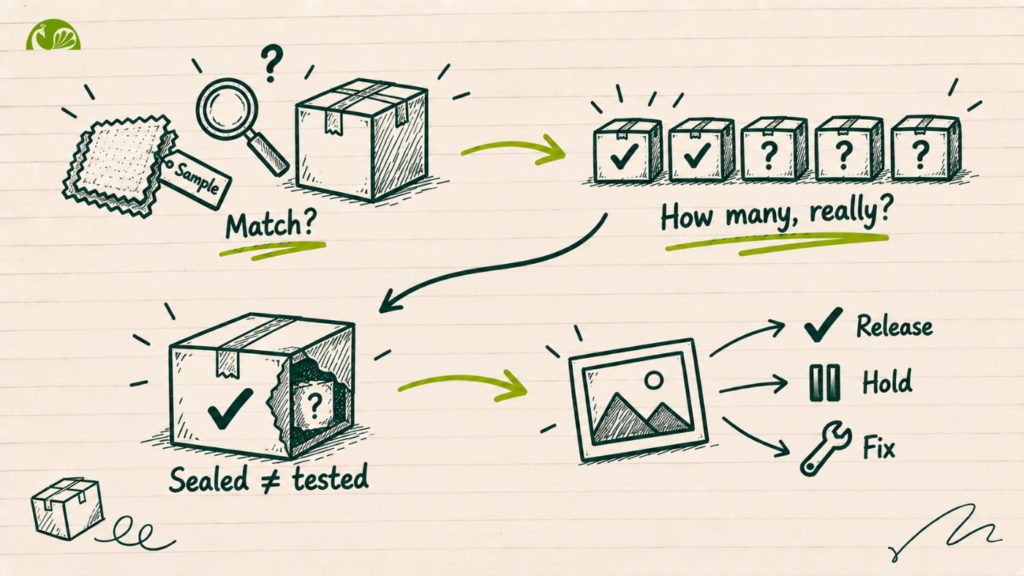
Ask whether the inspection covers every unit or a sample from the batch. If sampling is used, request the selection method and the number of units actually checked. A photograph of a few good pieces tells you little about the rest unless you know how those pieces were chosen.
Specialist inspection providers can use formal sampling plans. For example, SGS describes final random inspections using defined acceptance quality limit sampling and inspection reports. If your order needs that level of assessment, agree the applicable plan, defect definitions and acceptance criteria with a qualified provider.
A sample inspection cannot establish that every uninspected unit is defect-free. Checking every unit also has limits when a characteristic cannot be observed without testing or damaging the product. Choose the inspection method around what could go wrong and what you need to verify.
Keep visual inspection and product testing separate
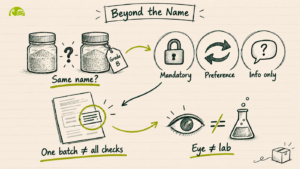
A visual check can identify visible damage, wrong items or a mismatch with approved artwork. It cannot by itself establish chemical composition, ingredient purity, electrical safety or long-term durability. A sealed package can look correct while leaving its contents or performance untested.
If a property matters to your purchase, specify how it will be verified. This might require a suitable laboratory test, a functional test or a review of relevant documentation. Confirm the method, responsibility and timing before ordering.
DS Corp’s published quality check process covers the received product, quantity, visible condition and packaging, with photographs before dispatch. It also explains limits for sealed products and specialist characteristics. For larger batches, confirm the coverage and any sampling in your quote.
Ask for evidence that supports a dispatch decision
Useful inspection evidence tells you what was checked, what was found and what remains unresolved. Ask for the order reference, inspection date, quantities checked, photographs and a clear record of differences from the specification.
For example, if a carton contains the wrong colour, the report should identify the affected carton and quantity. Agree whether the supplier will replace the items, sort the batch or take another action. Request evidence of the correction and any required recheck before approving dispatch.
- Release the order when the agreed checks are complete and the acceptance conditions are met.
- Hold the order when information is missing or a discrepancy needs investigation.
- Request corrective action when goods do not meet the agreed requirements, followed by the necessary recheck.
Agree who has authority to make that decision. If your commercial terms connect payment to an inspection milestone, make sure the wording explains what completion of that milestone requires.
Keep the record for the next order
Save the approved specification, final artwork, inspection evidence and any corrections together. They give the next order a clear starting point and help you identify recurring issues. A change in material, factory or packaging should prompt a review of the relevant checks.
For the wider sourcing process, including supplier selection and fulfilment planning, see our guide to sourcing products from India for Amazon FBA. Marketplace-specific requirements should be confirmed for the actual shipment.
Frequently asked questions
When should a pre-shipment inspection be arranged?
Agree the scope before ordering, then schedule the check when the goods are ready for the agreed assessment and there is time to address findings before dispatch. The timing depends on production and packing arrangements.
Is an approved sample enough for a bulk order?
A sample provides a reference for what you approved. It does not show whether the finished batch matches it. Compare the order with the agreed specification using the inspection coverage you have arranged.
Does a quality check guarantee customs clearance?
No. A product check and an import clearance decision serve different purposes. Verify destination requirements and the documentation for your shipment separately; a visual inspection does not establish legal compliance.
Define the checks for your order with DS Corp
When requesting bulk sourcing support, include your specification, quantity, sample reference and packaging instructions. Use our quote form to share the destination and explain which checks you need. We can discuss what fits the order and what needs separate assessment before you commit.