A raw material specification describes the material you need and the criteria used to accept it. Include identity, intended use, grade, measurable requirements, quantity, packaging and documentation. Have a qualified technical or quality reviewer set the acceptance criteria before requesting quotes. This general structure must be adapted to your material and applicable requirements.
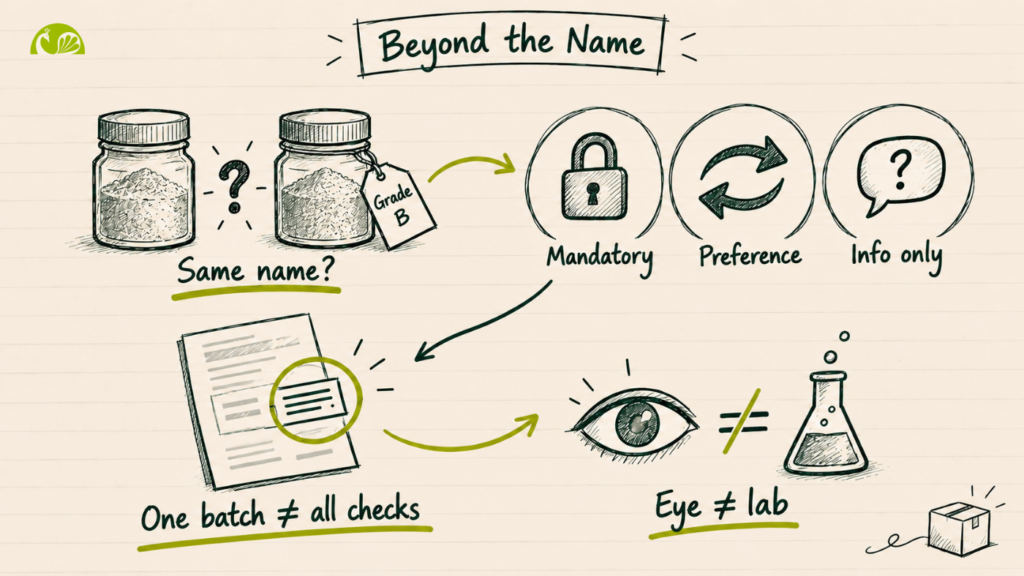
A material name alone can leave important questions unanswered. Two suppliers may offer products described in similar language while quoting for different grades, forms, pack sizes or documentation. A shared specification makes those differences visible before an order is placed.
Begin with the intended use and material identity
Tell the supplier what the material will be used for and where it will be imported. Explain whether it is an input for food production, a cosmetic base, a textile component or an industrial process. The intended use helps the supplier decide whether its offering is relevant.
Include the exact material name and any reference identifier used by your organisation. Where a standard, grade or supplier code is required, identify it precisely. Do not assume a general description such as premium quality means the same thing to every supplier.
DS Corp’s raw materials and ingredients sourcing service accepts enquiries that begin with a specification rather than a marketplace link. Share the grade, quantity and intended use so feasibility can be assessed.
Separate requirements from helpful background
Use clear labels for mandatory requirements, preferences and information requests. A mandatory parameter needs an acceptance criterion. A preference can allow the supplier to propose an alternative for review. An information request asks for evidence without implying that the answer has already been approved.
For example, a buyer might require a particular material grade, prefer a certain pack size and ask whether a recent sample is available. These are three different decisions. Keeping them separate prevents an optional detail from obscuring a requirement that cannot change.
If you do not yet know an acceptance limit or test method, mark it for technical review. Copying a value from an unrelated supplier sheet can create a requirement that does not fit your process.
Use a specification sheet that can be answered
The following template gives suppliers a practical way to respond. Fill in the requirements before circulating it, and ask suppliers to flag exceptions rather than leaving fields blank.
| Field | Information to provide |
|---|---|
| Document identity | Specification number, version, issue date and approving contact |
| Material | Exact name, required grade and relevant reference code |
| Intended use | Application and destination country |
| Acceptance criteria | Required parameters, units, limits and agreed assessment methods |
| Quantity | Trial and proposed order quantities with the unit of measure |
| Packaging | Pack size, material, closure and identification requirements |
| Documentation | Required product, batch or test documents and when they are needed |
| Handling | Storage and transport conditions and, where relevant, minimum remaining shelf life at dispatch or receipt |
| Changes | Written review and approval of any proposed change to the agreed specification |
Add a supplier response column to your working copy. Use responses such as meets requirement, exception proposed or clarification needed. Require written review of any proposed change to an agreed requirement before supply; do not treat silence or a general yes as acceptance evidence.
Ask for evidence that relates to the material offered
Request the supplier’s specification and available supporting documents. Check that the product name, grade and manufacturer details correspond to the offer. If documents refer to a different material or an older version, ask for an explanation before relying on them.
Where a certificate of analysis is required, ask what batch it covers and which results and methods it reports. Do not treat the document title alone as proof that every criterion in your specification has been checked. A supplier-provided document and independent testing are different forms of evidence.
A certificate of analysis records the results reported for the identified sample or batch; it is not automatically proof of lawful import or suitability for every use. Where safety or handling documentation is relevant, ask your technical reviewer which documents are required. Do not assume one certificate replaces a safety data sheet, specification or other required evidence.
Tell the supplier which documents are needed before sample approval, before dispatch and with the shipment. If an independent laboratory assessment is necessary, agree its scope with a qualified provider and identify who will arrange and pay for it.
DS Corp can pass on available supplier documentation within the agreed sourcing scope. Confirm availability at the quote stage rather than assuming every requested certificate comes with every order.
Review a sample against the intended application
Ask whether the sample represents the grade and production source being quoted. Record its identifier and the conditions under which it is evaluated. A useful sample review answers a defined question about suitability for your application.
For a textile input, for example, the buying team may need to compare the offered material with its approved production reference. For an ingredient, the relevant technical team may need a different assessment. The supplier should know what evidence the review is expected to produce.
Supplier capability also matters beyond the sample. Use the supplier verification checklist to assess the business and order arrangements alongside the technical review. A sample approval should identify the specification version it supports.
Compare quotations without losing the specification
Keep quantity, grade, packaging and requested documents consistent when comparing offers. Ask suppliers to list any exception beside the price. A cheaper offer for a different grade is a different proposal, even if the material name looks similar.
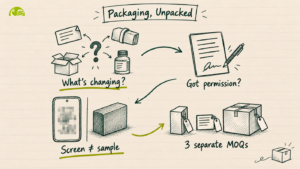
Discuss minimum quantities and sample terms before deciding the first order size. Our guide to minimum order quantities in India can help you frame that conversation. Ask separately about lead time for the material and the time needed to obtain any agreed documents or tests.
For restricted or sensitive goods, check feasibility before requesting a firm order. The DS Corp restricted items page describes company sourcing and shipping guidance; it is not an exhaustive statement of import or export law. Confirm the Indian export rules, destination requirements and carrier restrictions for the actual material and route.
Define what happens before a batch is dispatched
Agree the checks needed for the order, such as pack count, visible condition, label details and correspondence between batch identifiers and documents. State who reviews the evidence and who authorises dispatch.
The DS Corp quality check process describes visual checking. Confirm the scope for your order. A visual check cannot establish chemical composition, purity or suitability for a specialised process. Those questions need appropriate technical evidence; dispatch approval alone does not establish regulatory compliance.
Keep the final specification, supplier response, approvals and shipment documents together. For repeat orders, confirm the approved version and require proposed changes to be reviewed before supply. This creates a usable record of what was requested and accepted.
To begin, send DS Corp your material sourcing brief with the grade, intended use, quantity, destination and required documentation. If a requirement is still undecided, identify it clearly so the next discussion can resolve it.
Frequently asked questions
Can I request a quote without a product link?
Yes. Raw material enquiries can begin with a written description and specification. Include the material, intended use, grade, quantity and destination. These details help DS Corp assess the request and ask useful follow-up questions.
Who should set the technical acceptance limits?
Your technical or quality team should establish limits and assessment methods appropriate to the intended use. A sourcing partner can communicate those requirements, but should not invent technical limits on the buyer’s behalf.
Does a certificate of analysis replace every other check?
No. Review which material, batch, parameters and methods the document covers. Decide whether that evidence meets your specification and whether further checks are needed. The presence of a certificate alone does not answer every suitability question.
What should I do if a supplier offers a substitute?
Ask for the proposed difference in writing, including grade, source, packaging and supporting documents. Have the relevant approver assess it before changing the order. Update the specification version if the substitute is accepted.
This article provides a general structure for a sourcing brief. Food, cosmetic, chemical, pharmaceutical and other regulated materials may need additional specialist requirements. Obtain qualified review for the actual material, intended use and destination before ordering or using it.