A white label packaging brief should specify the product, destination market, retail pack, artwork version, label information, quantities and export cartons. Approve the final artwork and agree whether a physical sample is needed before production. A digital proof cannot establish physical fit, material performance or print quality. Record who may authorise changes.
Adding your logo to a product is only one part of packaging. The pack also needs to fit the item, identify the correct variant and survive the handling expected along its route. For an overseas brand sourcing from India, those decisions are easier to manage before a production order is confirmed.
Define what the supplier is actually changing
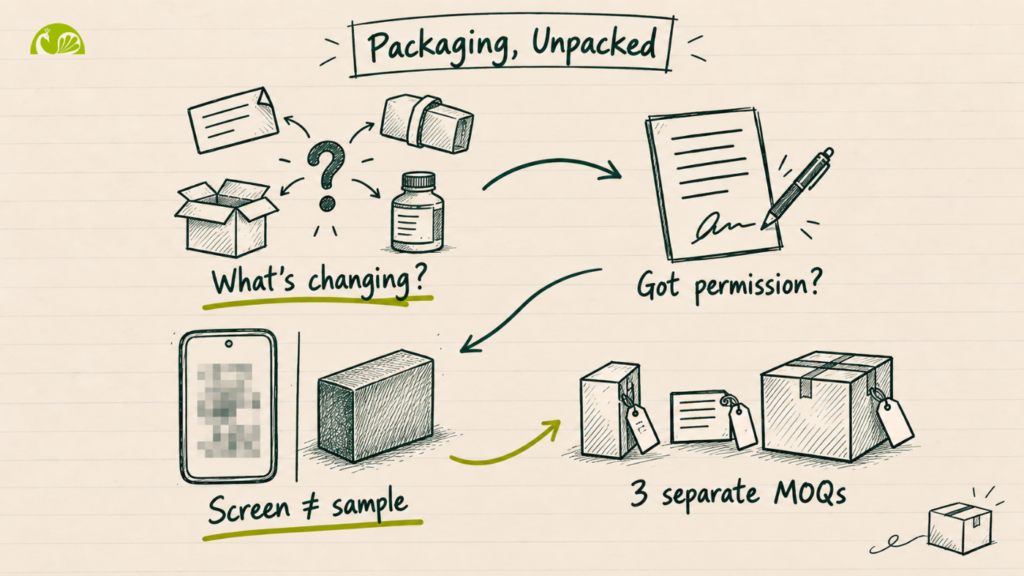
Start by identifying the work you need. Is it a sticker on an existing pack, a printed sleeve, a new retail box or a different container? Each option creates a different sourcing and approval task.
White label arrangements often begin with an existing product offered under a buyer’s brand. Suppliers use terms such as white label, private label and custom packaging differently, so describe the exact change instead of relying on the label alone. Product changes should be listed separately from packaging changes.
DS Corp supports white label products and packaging coordination for international buyers. Share your product requirements and branding brief so the feasible scope can be assessed before you commit to printed materials.
Confirm in writing that the product is offered for sale under your brand and that you have permission to use the brand name, logo, artwork, images and other design assets. Do not assume that buying an existing branded product gives you permission to remove its labels or reuse its packaging design.
Write the packaging brief before finalising artwork
A designer needs the pack dimensions and construction before preparing a final print file. A supplier needs the approved file and physical requirements before preparing the finished pack. Give both parties the same brief.
| Brief item | What to record |
|---|---|
| Product and variant | SKU, size, colour or other identifier that distinguishes the contents |
| Pack format | Container, sleeve, pouch, box or label, with agreed dimensions |
| Material and finish | Required material, surface finish and any handling concerns |
| Artwork control | File name, version, date, owner and final approver |
| Quantity | Units per variant, packaging quantities and any agreed spares |
| Destination | Country, sales channel and delivery requirements |
| Outer carton | Units per carton, identification marks and protection needed |
For example, consider two sizes of a cotton storage bag sold under one brand. The logo may be identical, but the size label, SKU and unit count need to distinguish the versions. Create separate approval records where those details differ.
Check the label content for the destination
List the information your product and destination require before printing. Depending on the category and market, this may include composition or ingredients, quantity, responsible business details, warnings, care instructions, required languages, origin information or traceability details. Confirm the actual requirements; this is not an exhaustive legal checklist.
Give the supplier approved wording and identify who will review it. Packaging coordination is not legal approval of a label or product. Use claims such as organic, certified, food safe or a performance statement only after confirming both supporting evidence and any applicable conditions for using the claim or mark.
Check the legal responsibilities that follow from your role as brand owner, manufacturer, importer or seller. These depend on the product and market. For UK consumer products, the official product safety guidance explains that businesses involved in making, importing, distributing or selling products have safety responsibilities.
For online resale, also confirm what the sales channel needs on the product or pack. Keep a clear record of the barcode or identifier assigned to each variant. Do not ask a printer to invent missing product information just to fill a space in the artwork.
Separate digital approval from a physical sample
A digital proof is useful for checking spelling, layout and version control. A physical sample helps you judge the pack’s fit, appearance and handling. Decide which approvals your order needs and what can proceed after each one.
Check that the product fits without unnecessary movement and can be removed without damage. Review the position of labels and seals. Where a barcode is used, test the supplied print under the conditions relevant to your fulfilment process. GS1 guidance on barcode quality highlights the importance of positioning, print condition and unobstructed scanning.
If colour is important, agree a reference and the way it will be assessed. A photograph on a phone can be useful for communication, but it should not be the only acceptance reference for a colour-sensitive design. Record any changes and approve the revised version before production.
Confirm minimum quantities for each component
The product, printed label and outer box may each have a separate minimum order quantity. Ask for these figures individually. A small product run does not necessarily mean the same quantity of custom printed packaging is available.
Our guide to minimum order quantities in India explains how to assess the quantity decision. For packaging, also agree who owns unused printed materials, where they will be kept and whether a future artwork change could make them unusable.
Compare a standard pack with a branded label against a fully custom pack if both would meet your needs. Choose based on the total cost and the product presentation you need for this order.
Plan the export carton as well as the retail pack
A retail box and a transport carton perform different jobs. Tell the packing team how many retail units belong in each outer carton, how variants should be separated and what identification needs to remain visible.
Ask for the proposed carton count, dimensions and weight before the shipping estimate is finalised. If packaging changes after that estimate, confirm whether transport charges change too.
Agree the process for packaging damage or incorrect labels before dispatch. The DS Corp quality check process describes visible checks. Confirm the inspection coverage and acceptance criteria for your order. Specialist testing needs a separate scope; photographs cannot establish every product characteristic.
Use one final approval record
Before release, bring the decisions together in a short approval record: product version, pack specification, artwork file, quantities, carton arrangement and open issues. Name the person authorised to approve it.
After approval, require proposed substitutions or file changes to be confirmed in writing. Keep the final record with the order so a repeat run can use the same starting point. The pre shipment inspection checklist can help you turn those approved details into dispatch checks.
Ready to assess a branded order? Send DS Corp your packaging requirements, including the product, destination, quantities and any existing artwork. A clear brief helps the team identify what can be sourced and coordinated.
Frequently asked questions
Can I put my brand on an existing Indian product?
Possibly, depending on the supplier’s offer, permissions, product category and destination requirements. Ask which branding changes are allowed and what minimum quantities apply. Do not assume every branded or marketplace product can be relabelled.
Is white label packaging the same as developing a new product?
No. Packaging an existing product under an agreed brand arrangement is different from changing its design or formulation. Explain which changes you want and confirm the supplier’s scope in writing.
Should I approve a physical packaging sample?
A physical sample is useful when fit, material, print appearance or handling matters. Agree the sample cost and approval process with the supplier. Keep the approved reference and record any differences accepted for production.
Can DS Corp confirm every labelling requirement for my market?
Ask DS Corp to confirm the packaging coordination included in your order. Have the relevant product or regulatory specialist review the requirements for your market, and supply approved wording and evidence before printing. Agreeing who performs a task does not by itself establish that each party’s legal obligations have been met.